Your Website Speaks One Language. Your Potential Customers Speak Many More.
Picture this: a customer in France is searching for exactly what you offer. They find your website, but it's in English only. They click "back" and go to a competitor. That story repeats millions of times every day around the world.
75% of internet users don't browse in English. And even if your product is exceptional, if your website doesn't speak your audience's language, you're closing the door on three out of every four potential visitors. The good news is that creating a multilingual website no longer means weeks of work, high budgets, or technical headaches.
What Used to Take Months Now Takes Minutes
Until recently, having a website in multiple languages meant hiring professional translators, configuring complex plugins, manually duplicating every page, and hoping the hreflang tags were set up correctly. A process that could take weeks and cost thousands of dollars.
With artificial intelligence, that scenario has completely changed. Today you can translate an entire website — with all its pages, menus, navigation text, and SEO metadata — in a matter of minutes. And we're not talking about robotic translations that sound like an instruction manual. Today's AI understands context, adapts tone, and respects the intent of the original message.
What Makes a Multilingual Site Truly Professional?
Translating content is only half the battle. A professional multilingual website needs to solve several technical challenges that most tools ignore:
- URLs with logical structure: Each language needs its own clear path (
/es/services,/fr/services), not confusing parameters like?lang=es. - Correct hreflang tags: They tell Google which version to show each user based on their language and region. Get this wrong and Google might show the wrong page — or worse, penalize you for duplicate content.
- Translated meta titles and descriptions: It's not enough to translate visible content. The metadata that appears in Google also needs to be in the corresponding language.
- Intuitive language selector: Visitors should be able to switch languages with one click, without losing the page they were on.
- Multilingual XML sitemap: So search engines can properly index each language version of the site.
Solving all of this manually requires advanced technical knowledge. Or a tool that does it for you automatically.
How It Works in SpeakSite (Spoiler: It's Easier Than You Think)
Let's get to the point. Here's how you create a multilingual website in SpeakSite, step by step:
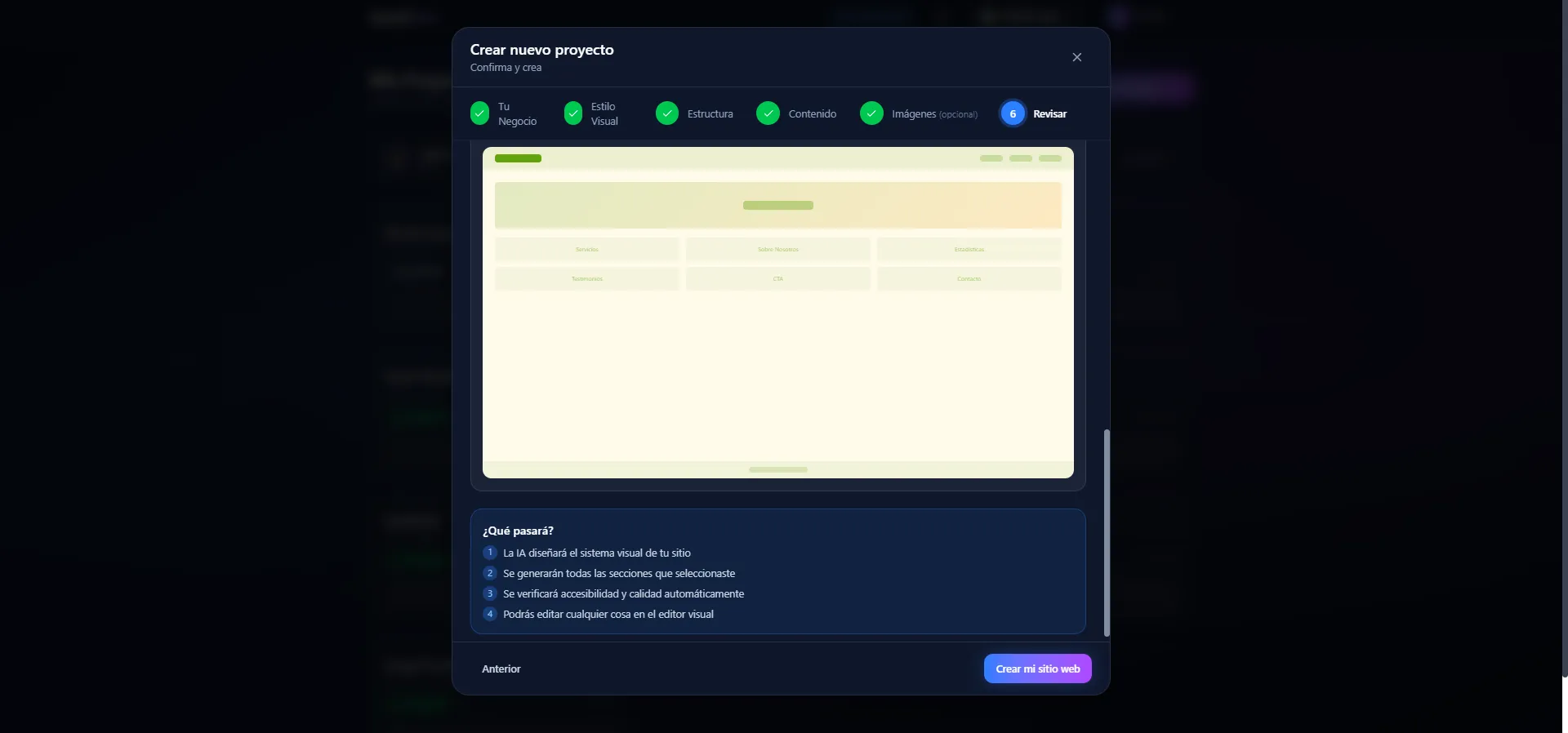
1. Build your site in your primary language
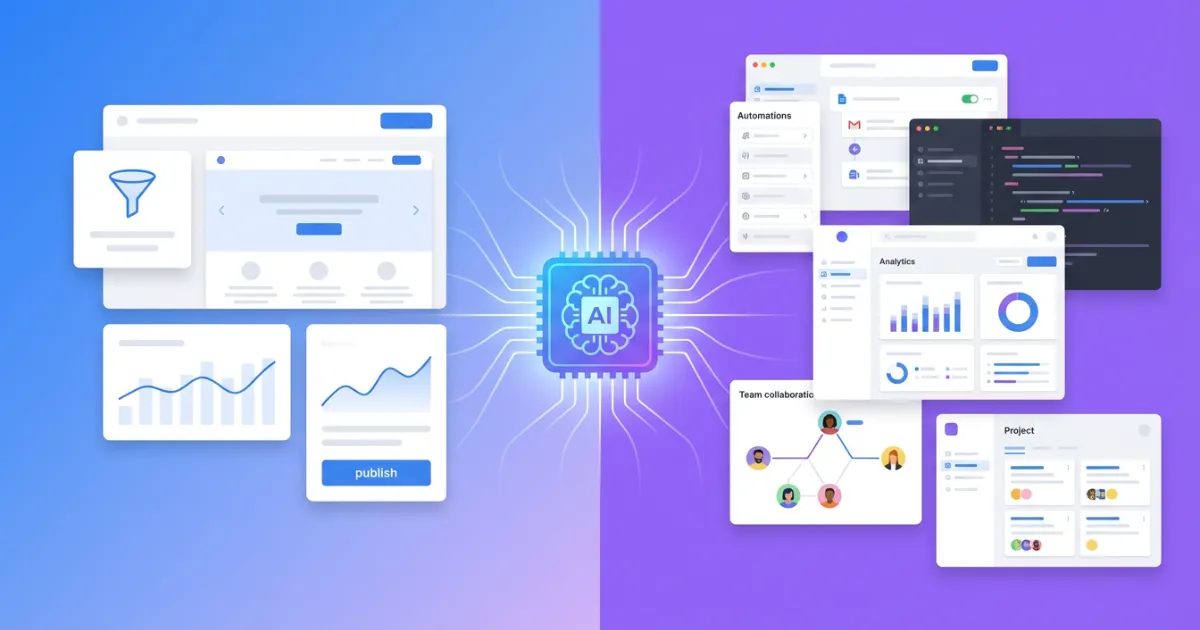
Start with the creation wizard. Describe your business, choose a visual style, and let the AI generate your complete site: pages, text, structure, SEO, responsive design... all ready to publish.
You don't need to write a single line of code. You don't even need to know what a line of code is.
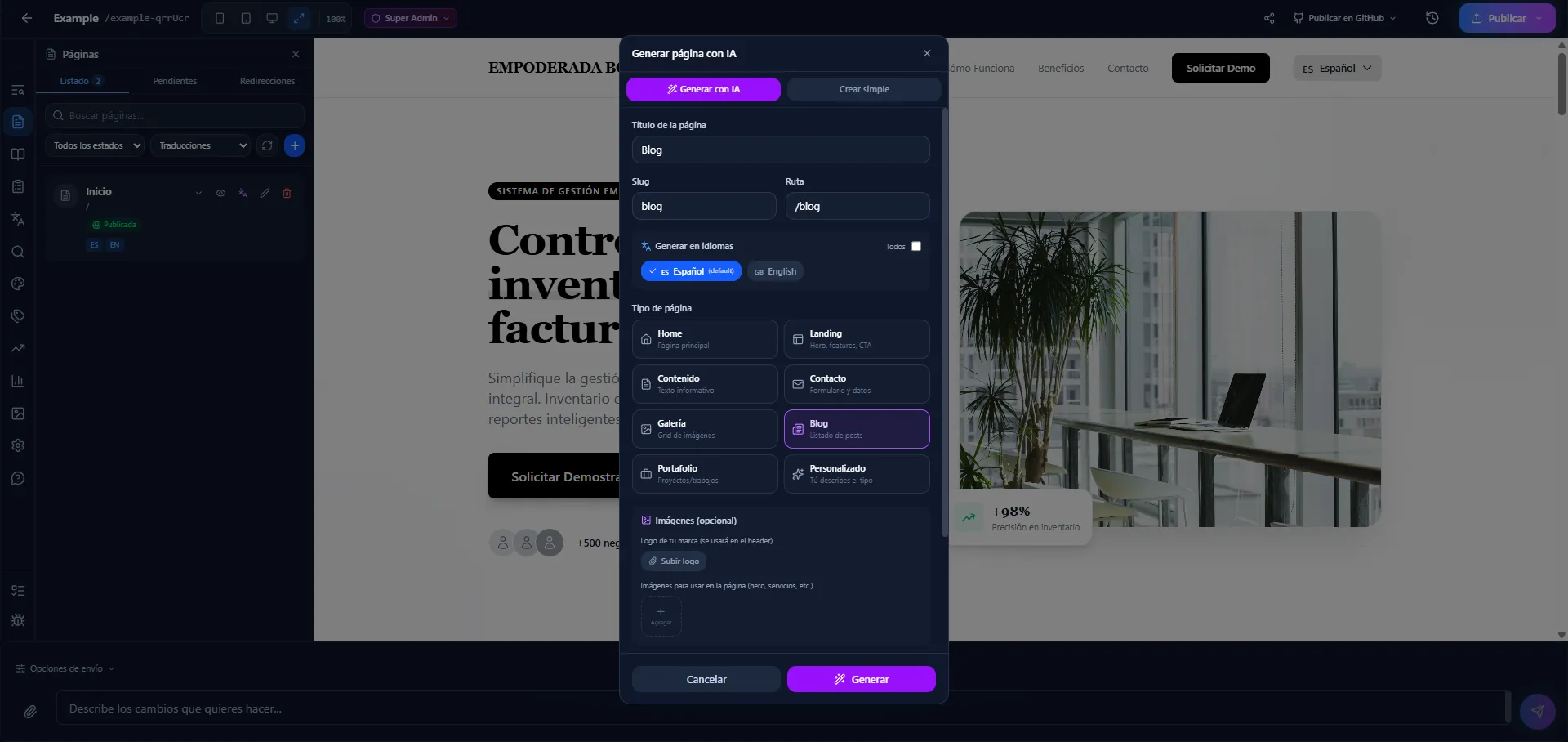
2. Select the languages you need
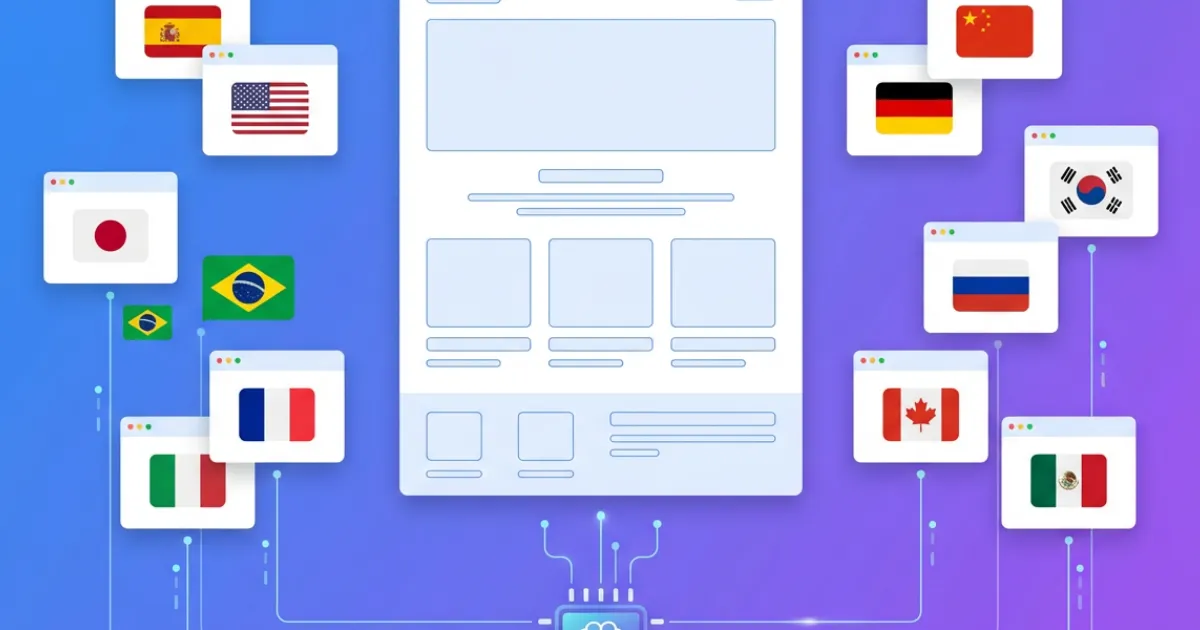
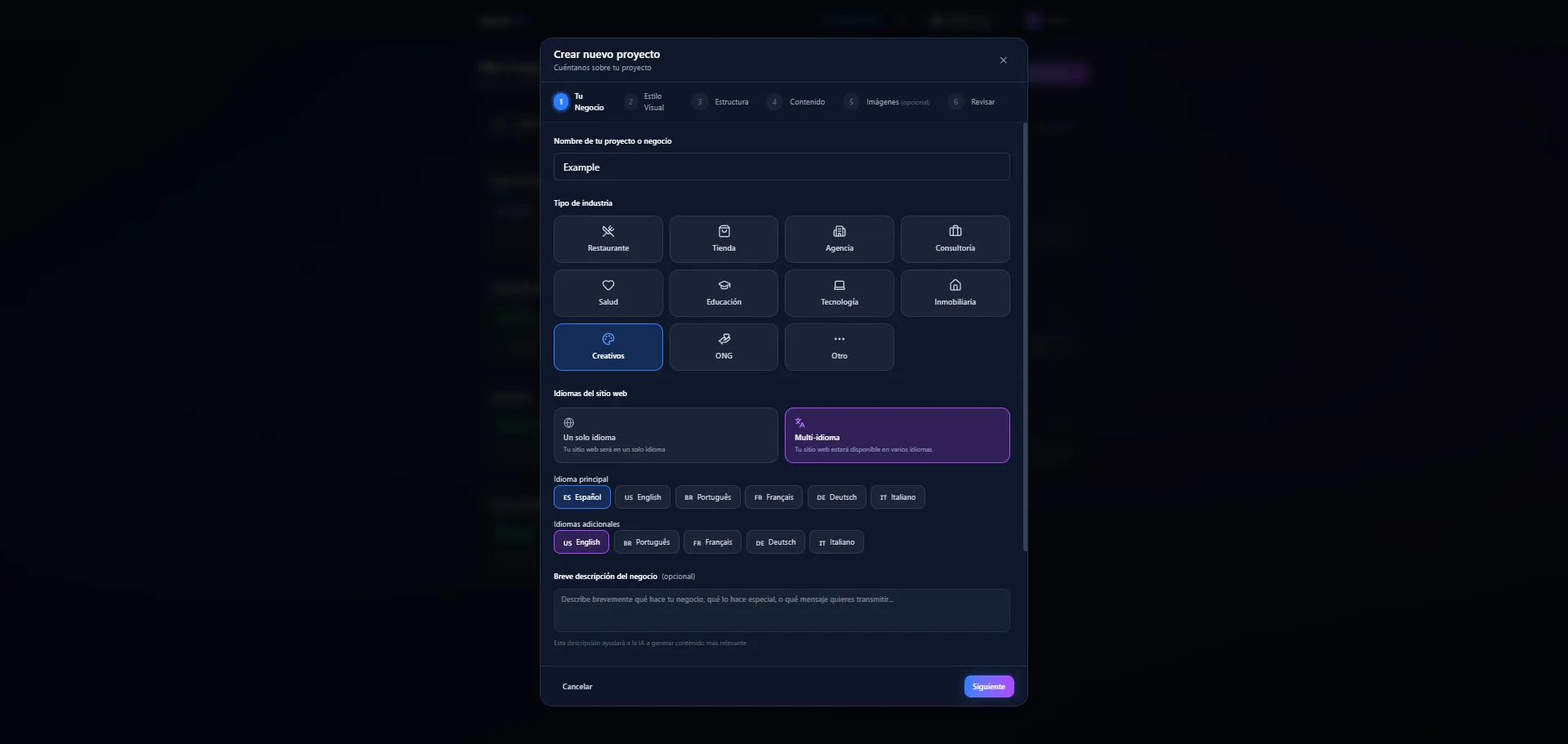
From your project dashboard, simply choose the languages you want your site translated to. SpeakSite supports up to 6 simultaneous languages: English, Spanish, French, German, Portuguese, Italian... you decide which ones you need based on your market.
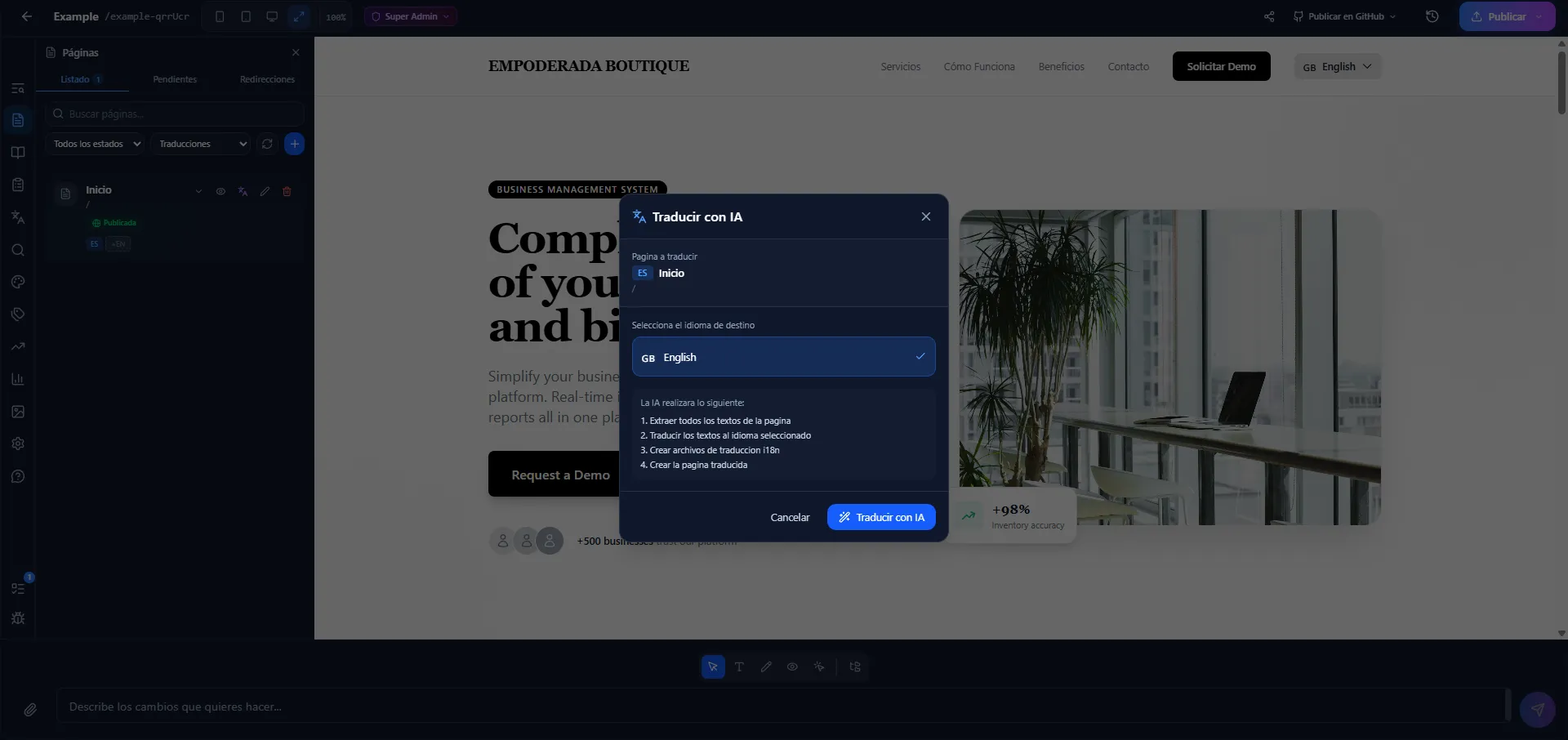
3. AI translates everything in one click
One click. That's all it takes. The AI translates every page of your site while maintaining:
- Your brand's tone and style
- SEO optimization with keywords adapted to each language
- Translated meta titles, descriptions, and Open Graph tags
- Clean URLs with language prefixes (
/fr/,/de/) - Automatically configured hreflang tags
- XML sitemap updated with all versions
No manual configuration. No plugins. No translation files to manage. Everything happens automatically and transparently.
4. Review and adjust if you'd like
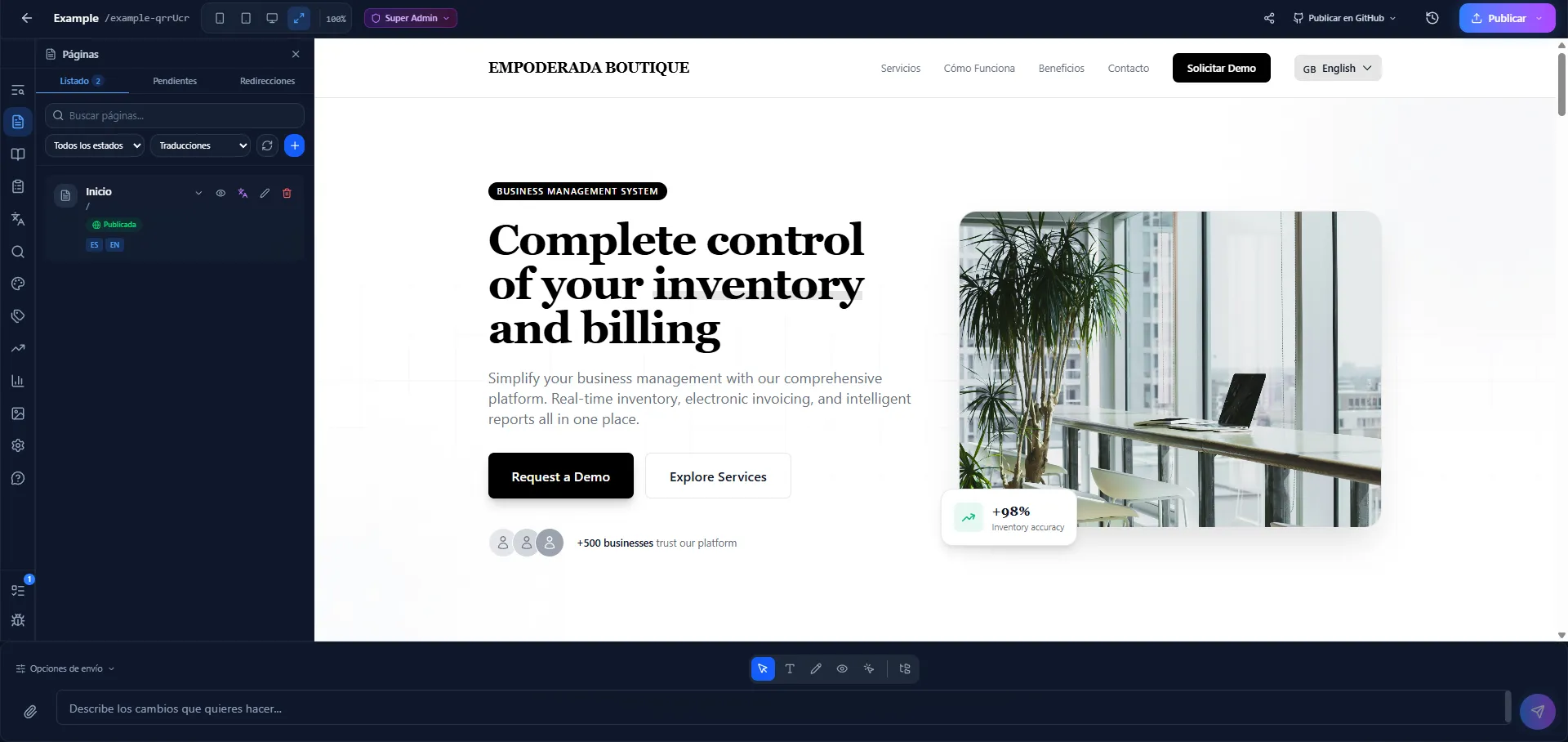
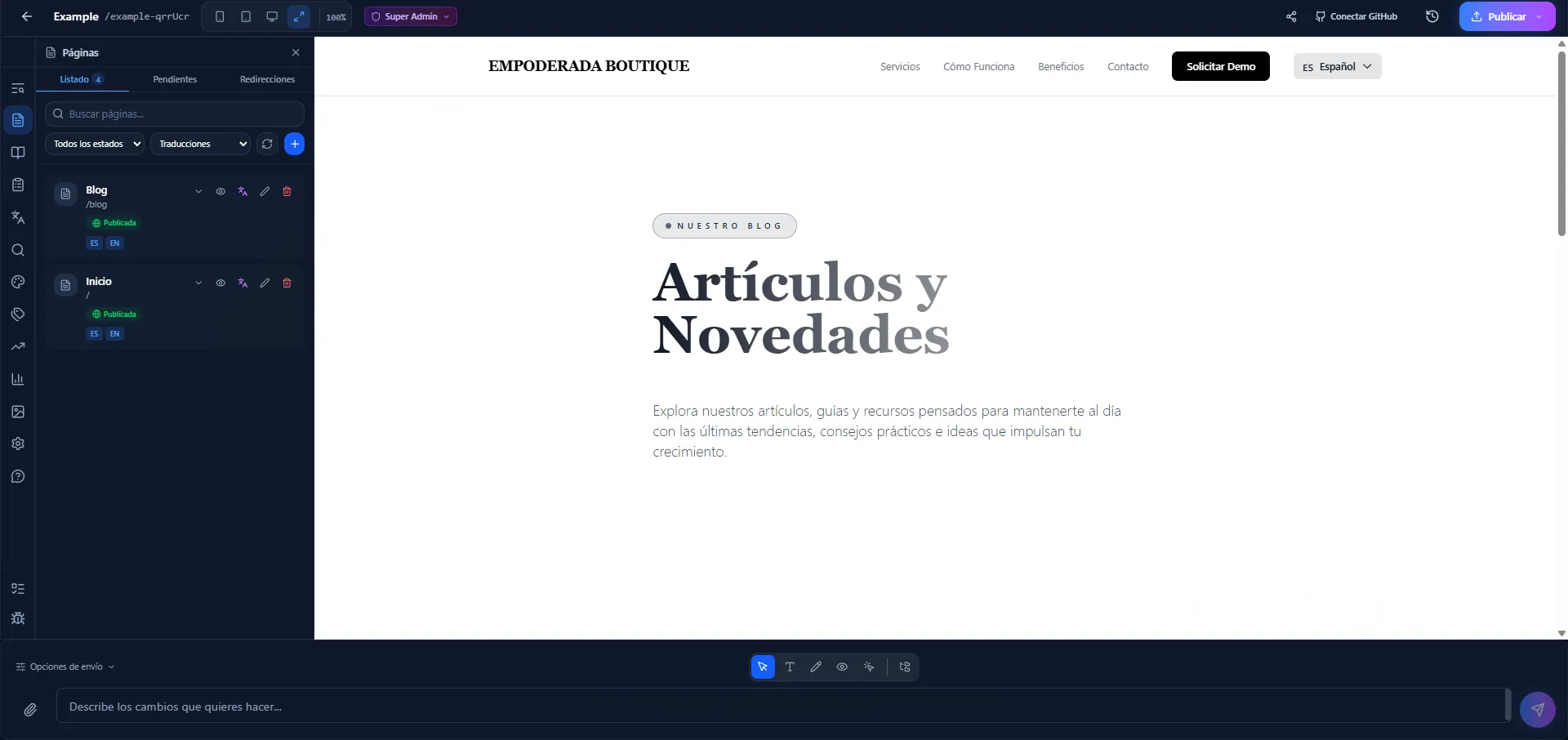
Did the automatic translation miss a specific nuance of your industry? No problem. You can edit any translated text directly from the visual editor, or ask the AI to adjust the tone with a simple instruction: "Make it more casual," "Use a more corporate tone," "Adapt this section for the French market."
You're always in control. The AI handles the heavy lifting; you take care of the details that matter.
The Real Problem Nobody Talks About: Multilingual SEO
This is where most solutions fail without you even realizing it. You can have your website perfectly translated into five languages, but if Google doesn't understand your site's multilingual structure, those translations might as well not exist.
The most common multilingual SEO mistakes are:
- hreflang tags with relative URLs instead of absolute ones (a technical error that many WordPress plugins make).
- Missing canonical URLs per language, which creates duplicate content confusion.
- Untranslated metadata: the site looks French but the Google title still shows in English.
- Sitemap without multilingual references: Google doesn't discover alternative versions of each page.
SpeakSite solves each of these issues natively. When you translate your site, the system automatically generates hreflang tags with absolute URLs, creates the corresponding canonical URLs, translates all metadata, and updates the XML sitemap. You don't have to think about any of this. It simply works.
What About Menus, Footers, and Interface Text?
A question few people ask until it's too late: what about the shared elements of the site? The navigation menu, the footer, the "Submit," "Read More," "Contact" buttons... all of those need to be translated too.
On many platforms, translating these elements requires editing configuration files, creating translation dictionaries, or manually modifying templates. In SpeakSite, the AI automatically translates all interface elements as part of the process. The menu, footer, forms, navigation labels... everything is translated coherently and contextually.
Multilingual Isn't Just Translating. It's Connecting.
A well-built multilingual website isn't simply a copy of the original in another language. It's a gateway to new markets, a signal of professionalism, and a tangible competitive advantage:
- Greater reach: Access the 75% of internet users who don't browse in your primary language.
- More trust: Users buy 72% more when information is in their native language.
- Better rankings: Google ranks sites higher when they have localized content and correct hreflang tags.
- Competitive edge: Most of your direct competitors probably don't have their website in multiple languages. You will.
Start Today. Seriously, Today.
You don't need a budget. You don't need a technical team. You don't need weeks of planning. With SpeakSite you can create your professional website and translate it into the languages you need — all in the same afternoon.
The process is simple: create your site, choose your languages, and AI takes care of the rest. Correct URLs, optimized SEO, configured hreflang, updated sitemap. All automatic, all professional.
Your business deserves to speak the language of every customer. And now, it can do it in minutes.